← All work
Owning a B2C→B2B2C pivot for a neurorehab platform, from strategy to shipped product
Neurofenix, Product Lead, 2021–2025
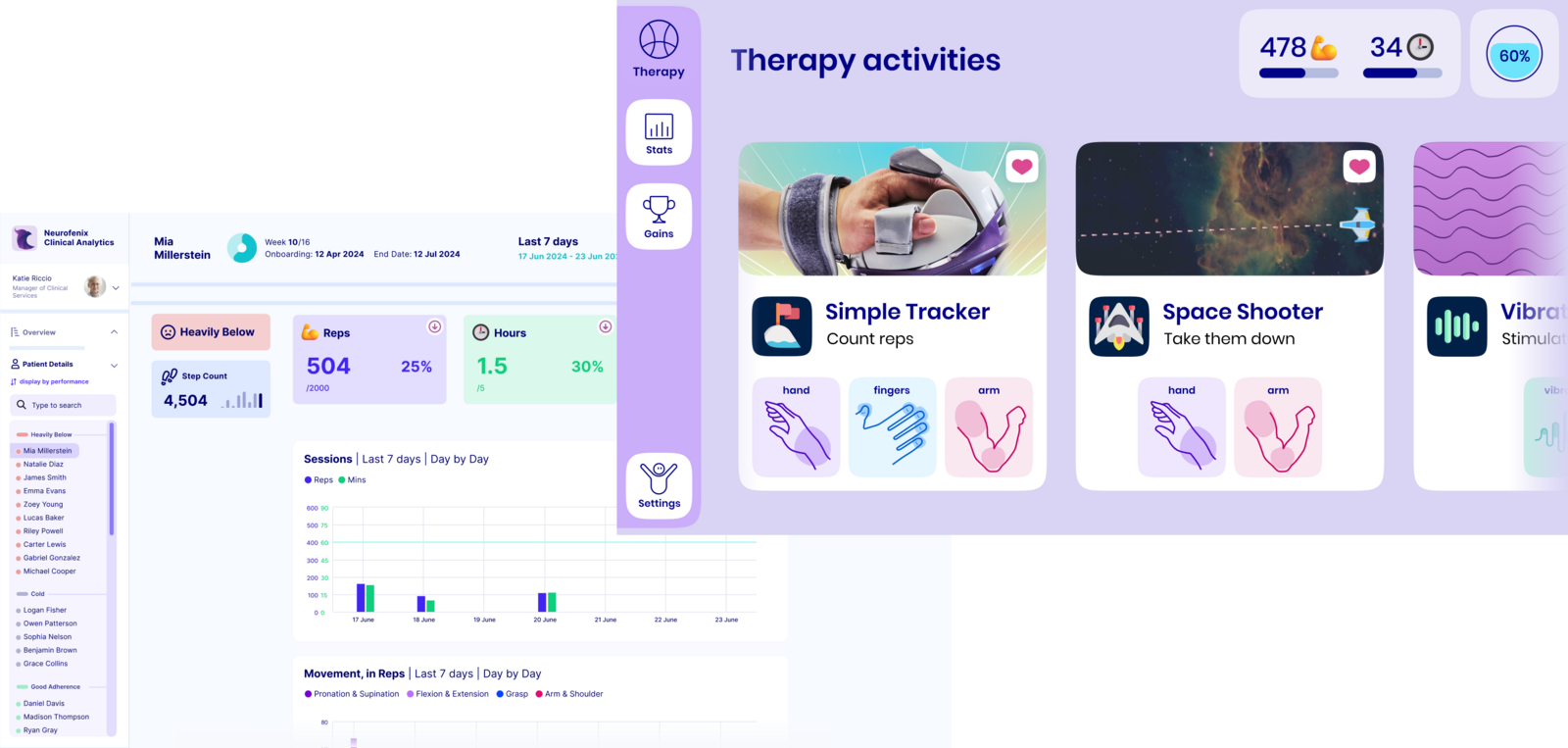
This work contains confidential product details. Enter the password I shared with you to continue.
Neurofenix, Product Lead, 2021–2025
I operated as the product lead across the Patient app (full rebuild), the Clinician Dashboard (net new), and the Partner Dashboard (net new). No PM existed before me, I defined the strategy, drove discovery, owned the roadmap, and worked directly with engineering and clinical teams to ship.
Strategy & discovery: Stakeholder mapping, user research with patients and clinicians, metrics framework definition, enterprise requirements translation, pilot enablement
Execution: Roadmap ownership, activation experiments, cross-functional alignment, HIPAA compliance decisions, engineering handoff, launch sequencing
Neurofenix builds connected neurorehabilitation technology, a medical device paired with software that helps stroke and brain injury survivors recover motor function at home. The science was strong. The product wasn't.
When I joined, the company had an early MVP built without a product process, a B2B channel that existed more on paper than in practice, and a user base of elderly stroke survivors who were disengaging at home because the app couldn't support independent use.
The strategic ambition was clear: pivot from B2C to a real B2B2C enterprise model, selling to health systems, insurers, and clinic networks. I was brought in to make that happen, across three products, with no existing product function.
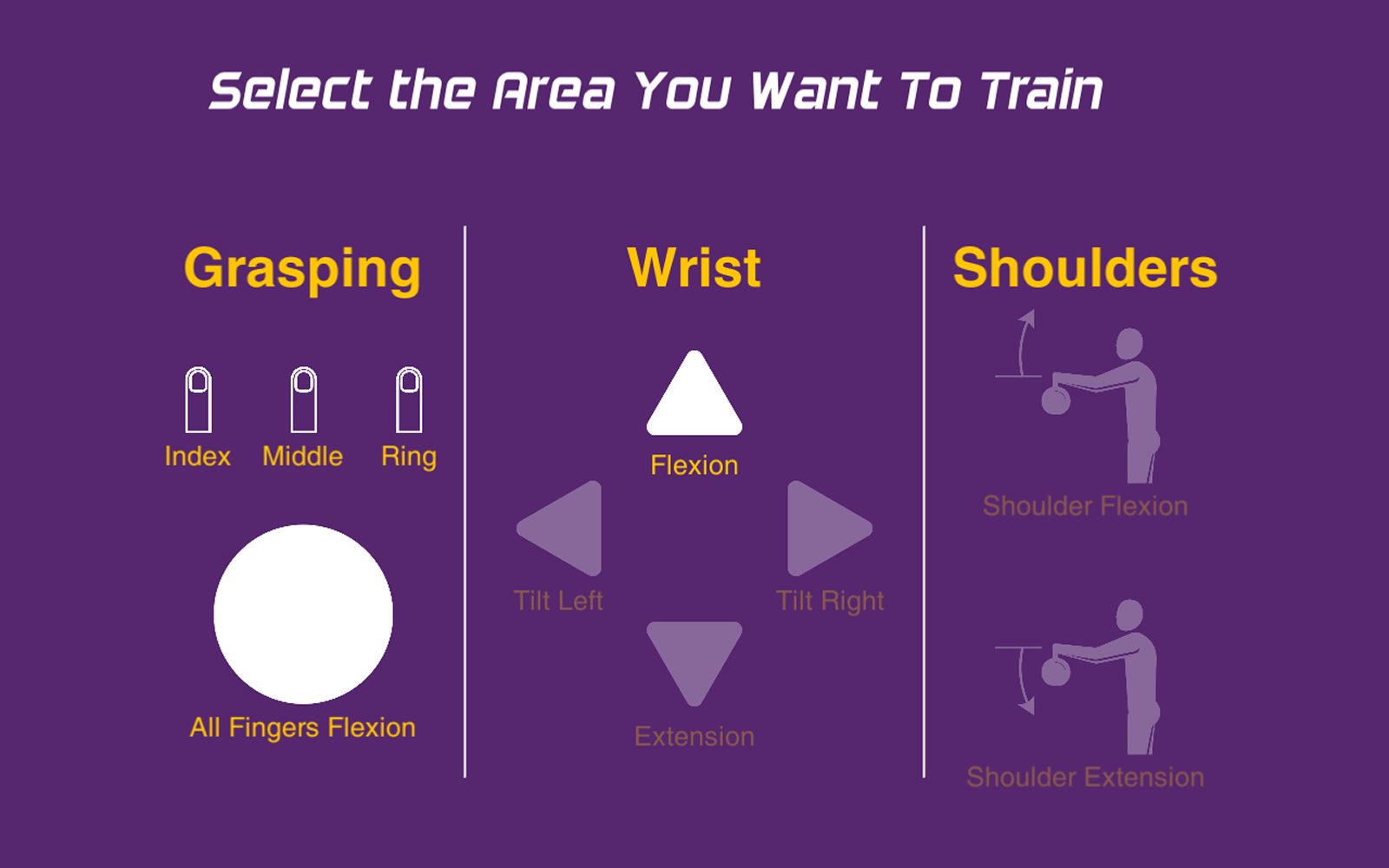
Patients, stroke and brain injury survivors, many elderly, needed radical simplicity. Every friction point was a dropout risk. The clinical stakes meant there was no room for "good enough."
Clinicians managing 20–40+ patients remotely needed prioritised signal: which patients are falling behind, and who needs an intervention today. Not dashboards. Actionable lists.
Health system administrators drove the 18-month enterprise sales cycle. They needed population-level outcomes, Medicare billing compliance, and ROI evidence to justify procurement.
The key insight that shaped the product direction: these three audiences had fundamentally different definitions of success, and the platform had to serve all three without trading one off against another.
Stakeholder gravity map
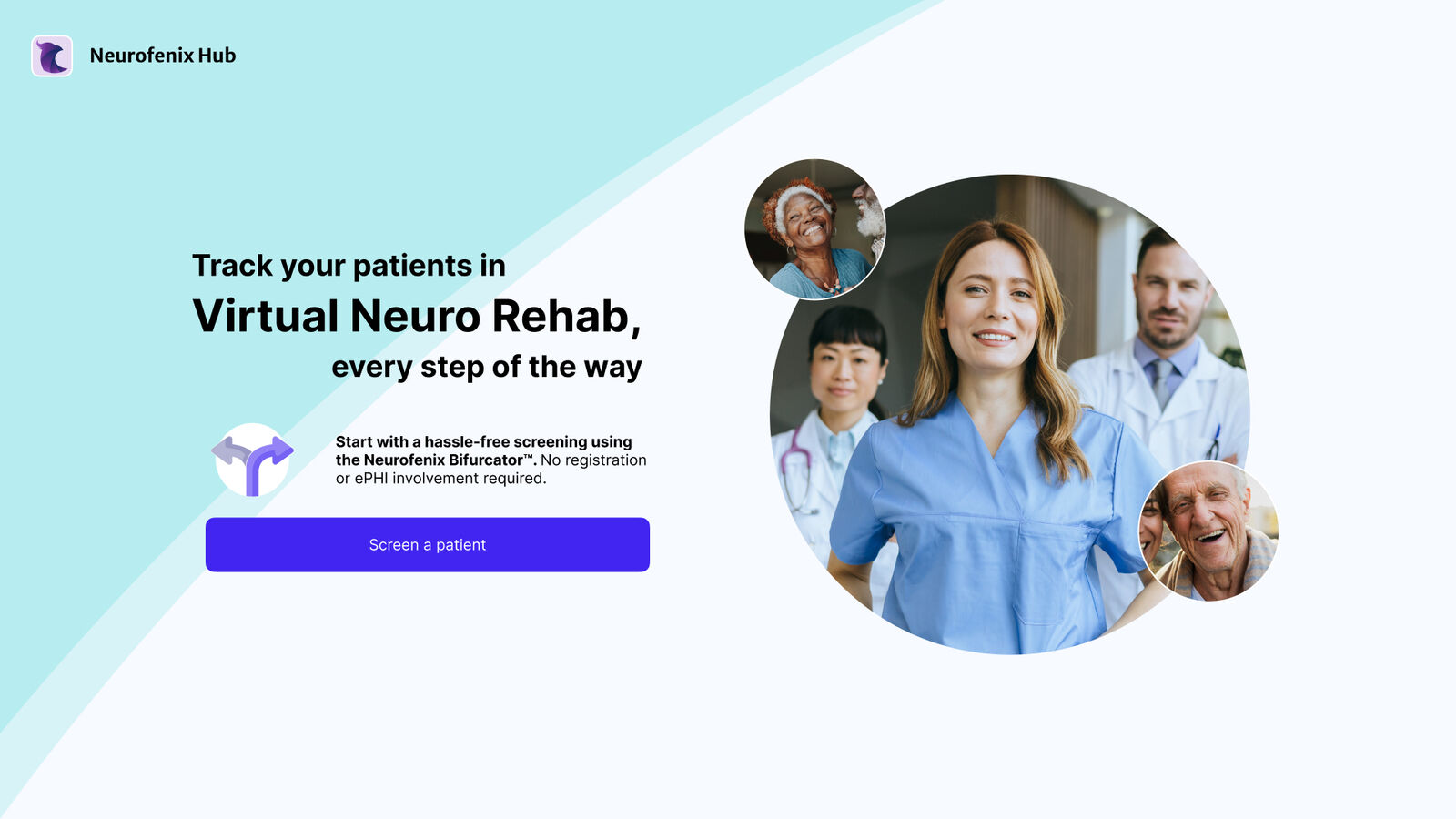
I sequenced the rebuild across 2–3 major releases, deliberately phased to avoid disrupting patients who had established therapy routines. The activation problem was the first priority, if patients couldn't onboard independently at home, nothing else mattered.
Onboarding as product strategy: Before the rebuild, there was no structured onboarding. I defined a step-by-step first-run flow with one clear action per screen, video walkthroughs, and visual confirmation at each stage. The result: a +50% activation lift.
Accessible-first, not accessible-after: I set the principle that every product decision had to work for the most impaired user first. Oversized touch targets, simplified navigation, no time-sensitive interactions. This wasn't just a user experience call, it was a clinical safety call.
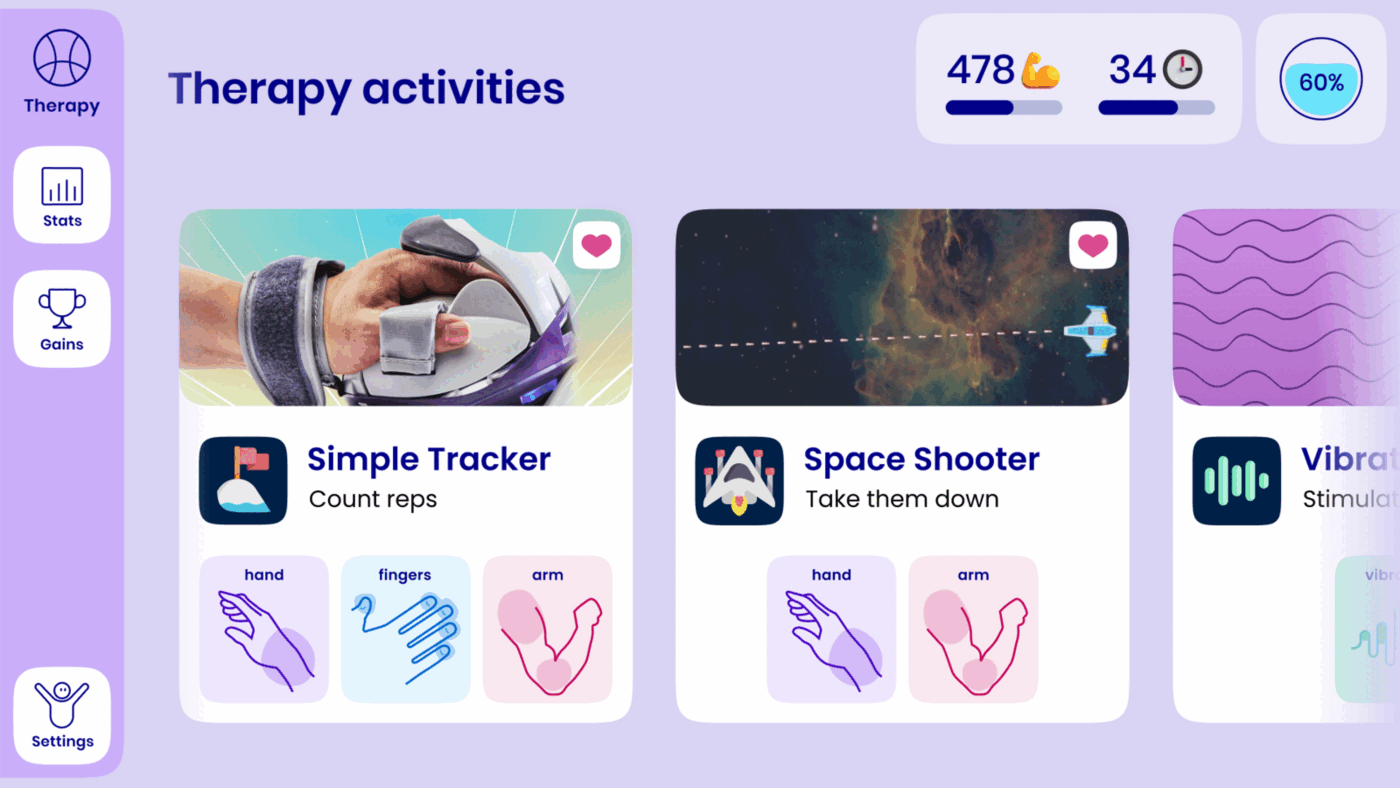
I prioritised the onboarding rebuild as the highest-leverage intervention. Before the rebuild, there was no structured first-run experience. I defined a step-by-step flow, one action per screen, video walkthroughs for each app section, visual confirmation at every stage. Result: a +50% activation lift.
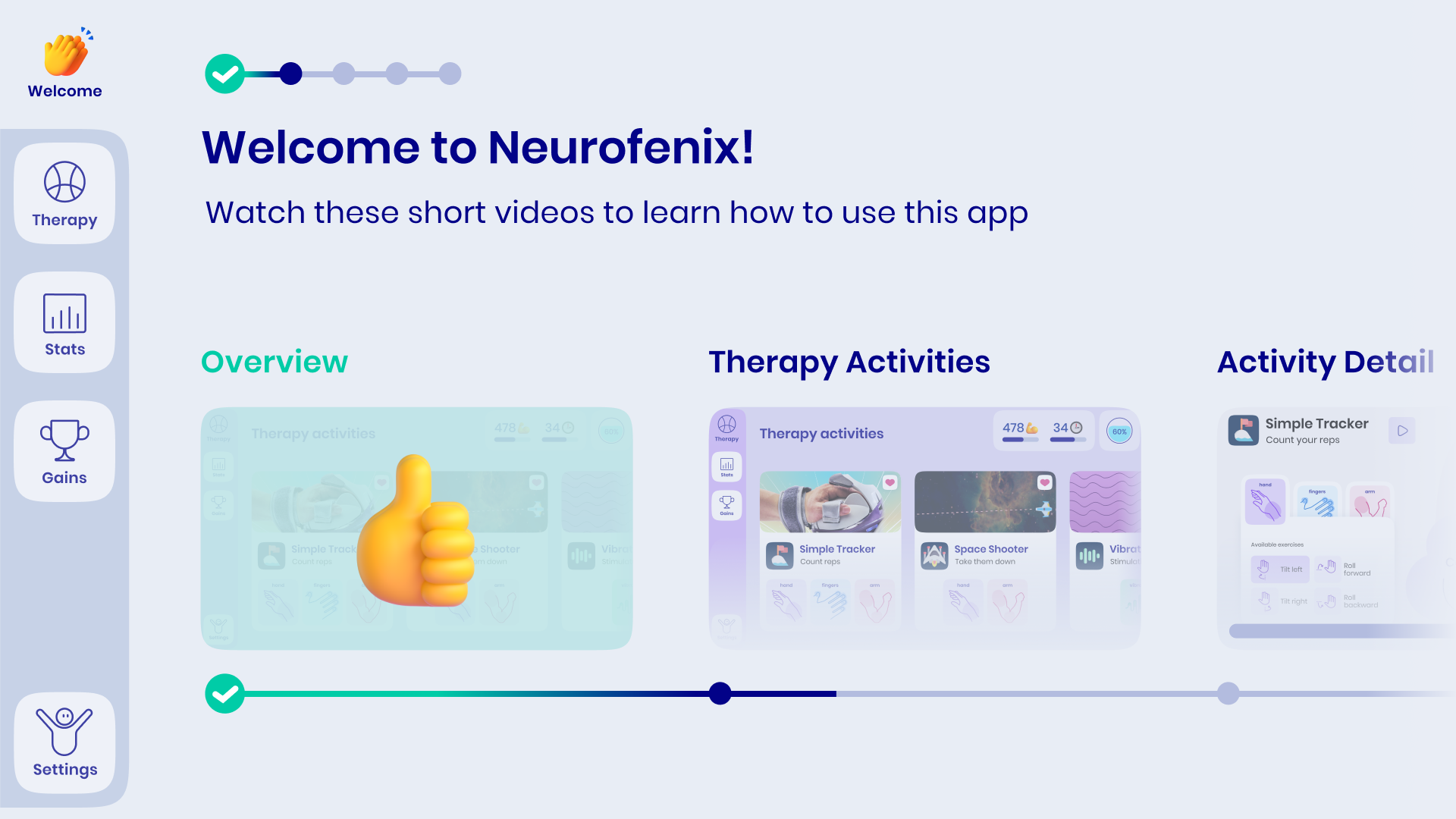
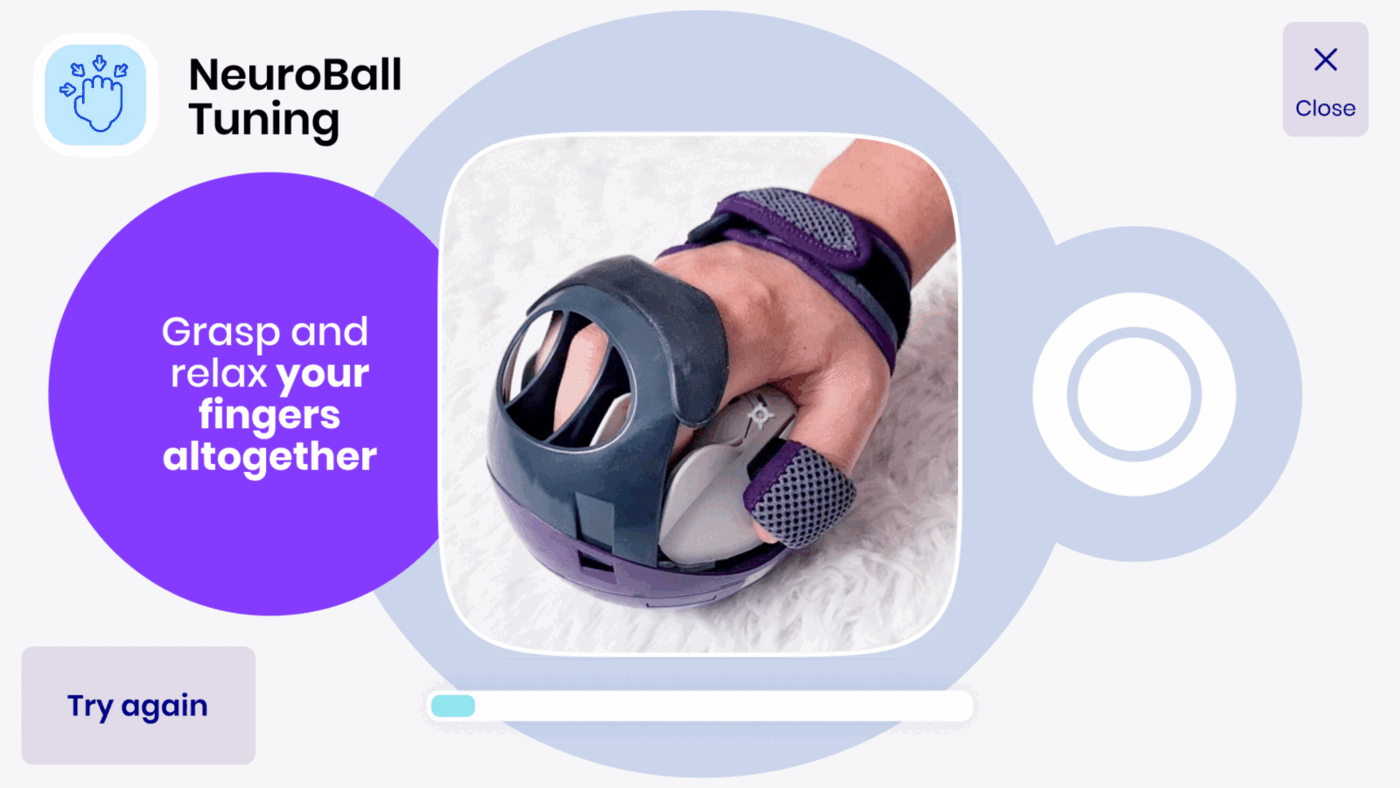
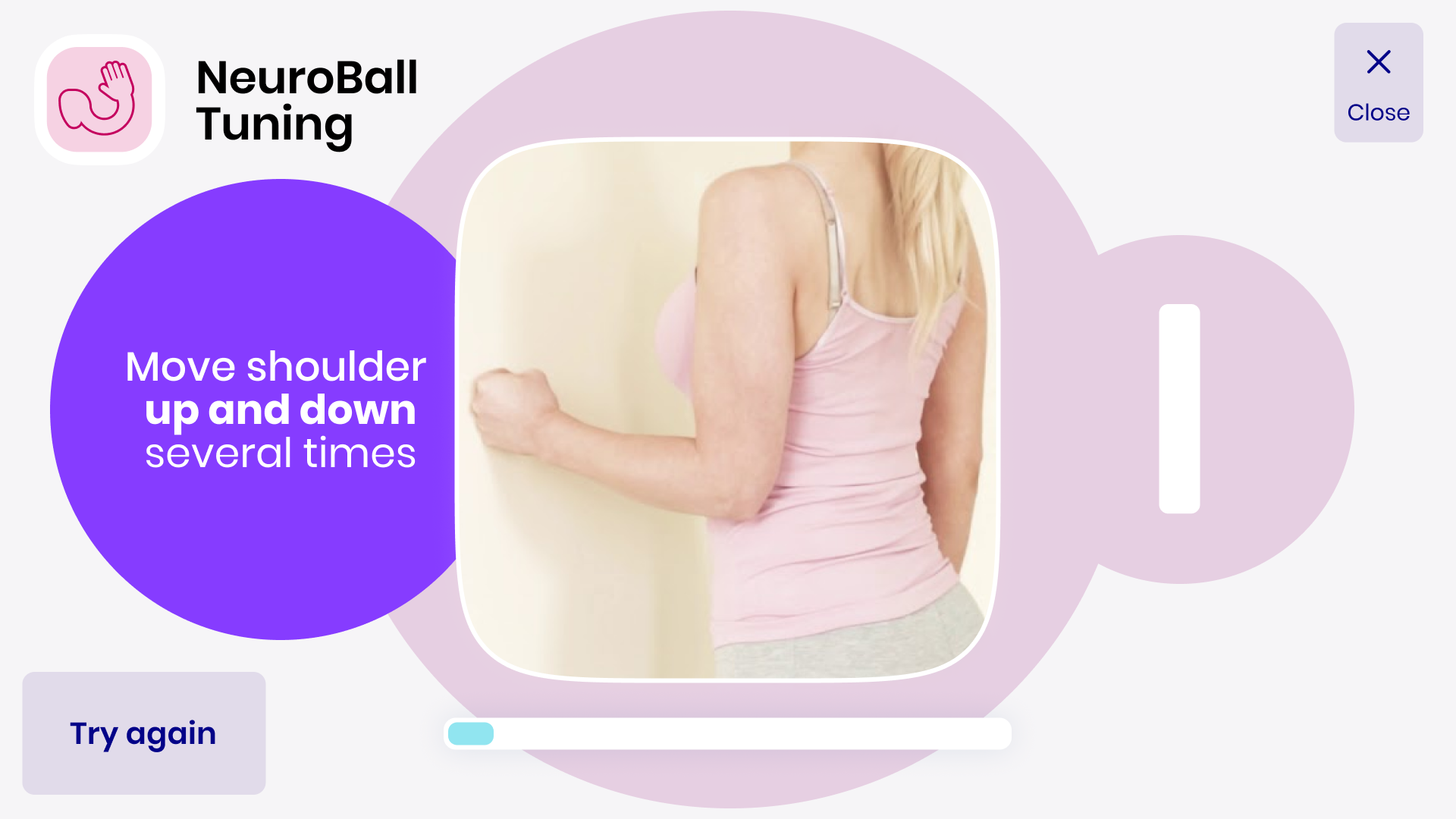
Device calibration was a known drop-off point, a dry technical step that patients abandoned. I reframed it as a guided, encouraging sequence, turning setup into a confidence-building moment before the first session.
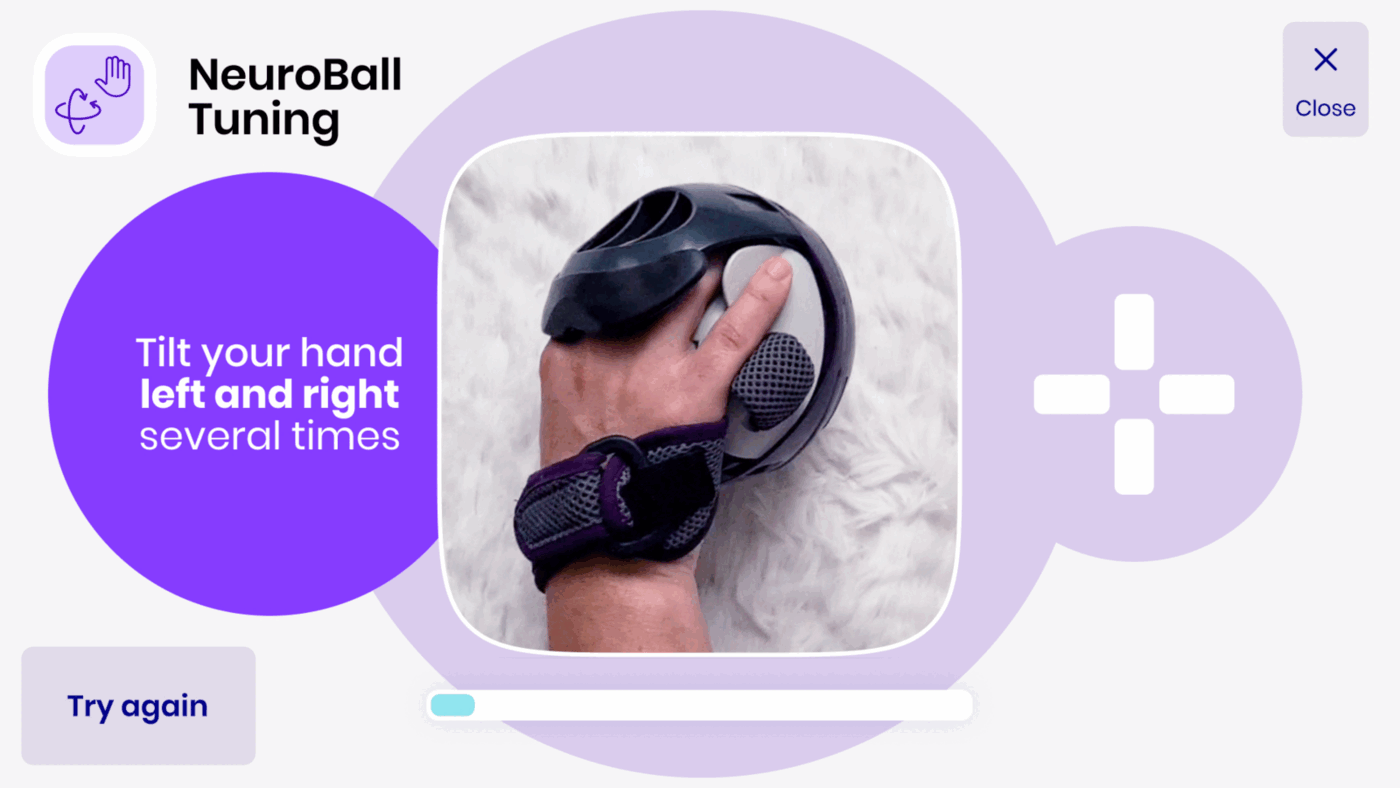
Retention mechanics: gamification with clinical intent
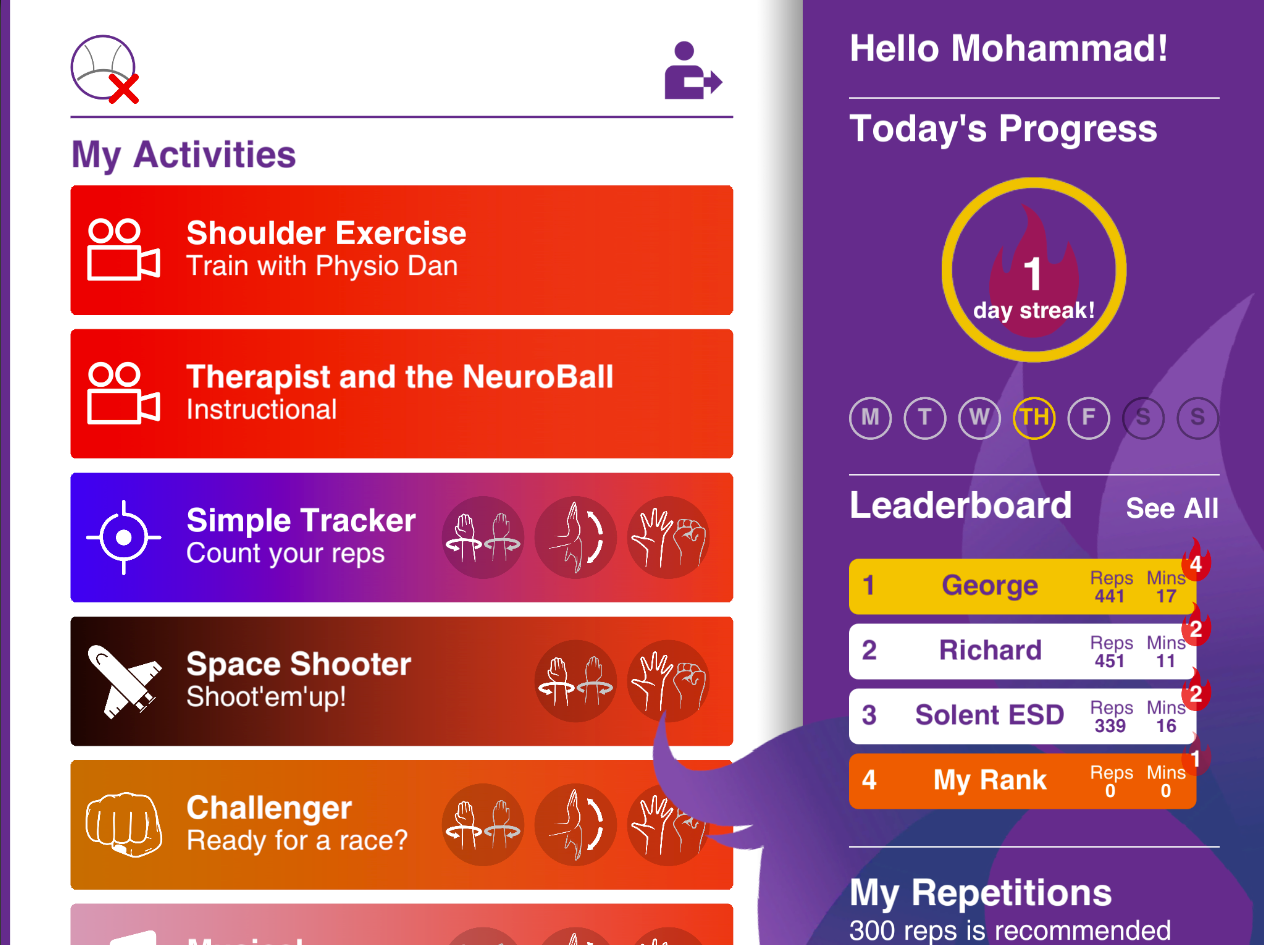
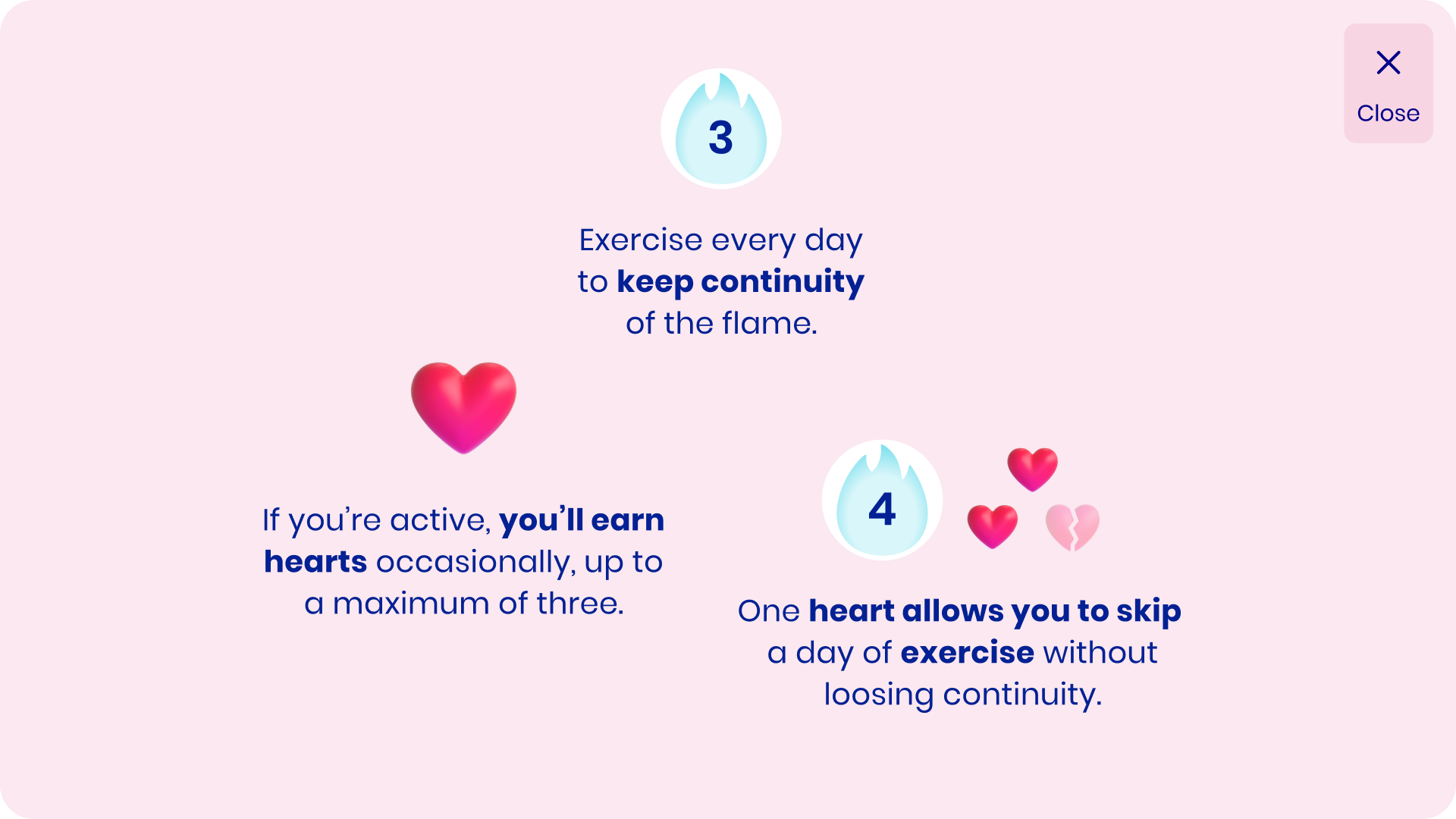
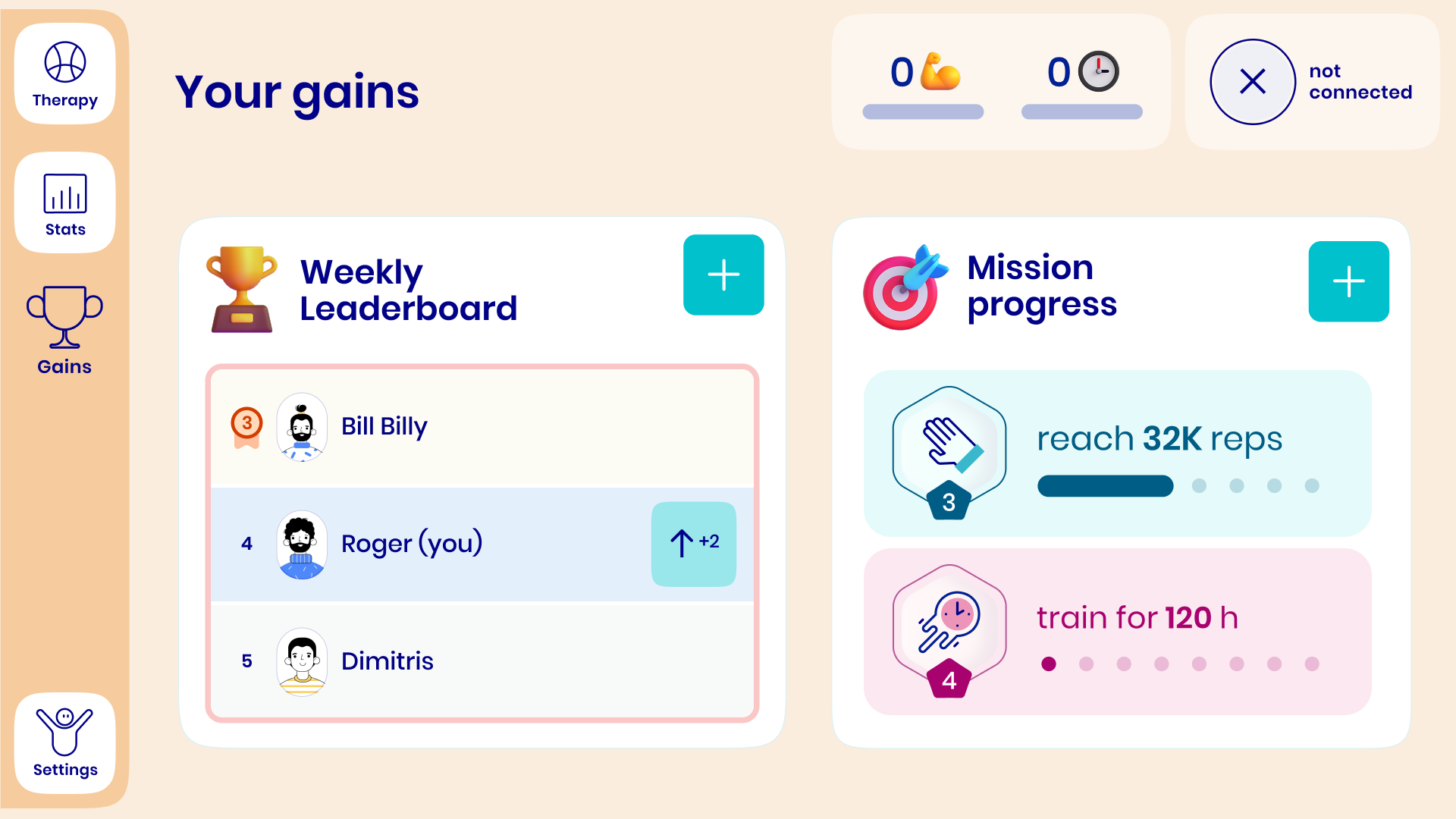
I defined a gamification system, streaks, challenges, progress tracking, a social leaderboard, built around one insight: stroke survivors don't want cartoon rewards, they want evidence they're improving. Every mechanic was co-validated with clinicians and patients before shipping.
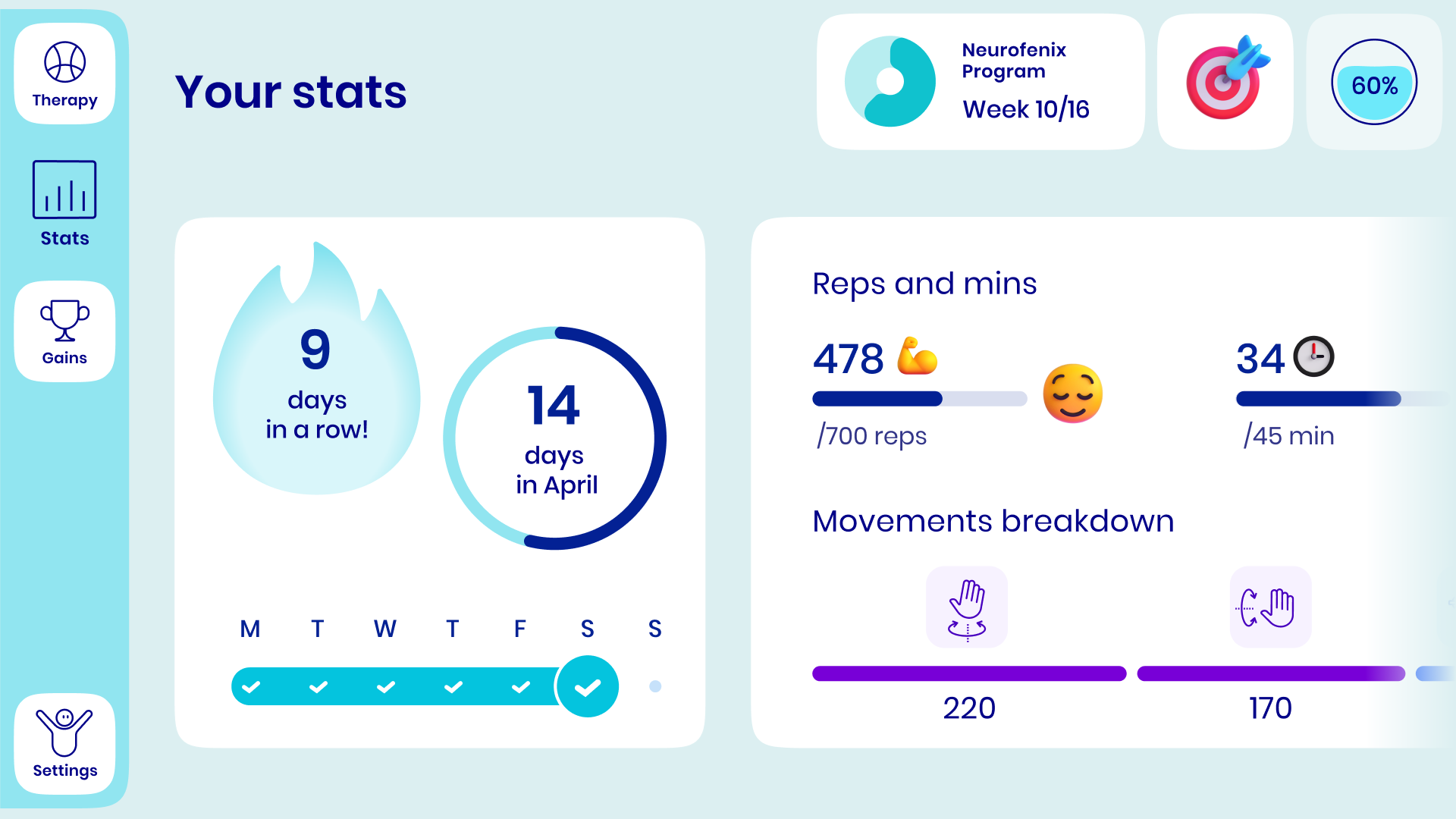
The retention system sustained 5.5-day/week adherence, top quartile for digital therapeutics. Across the platform's lifetime, it drove 31M+ repetitions across 680K+ sessions.
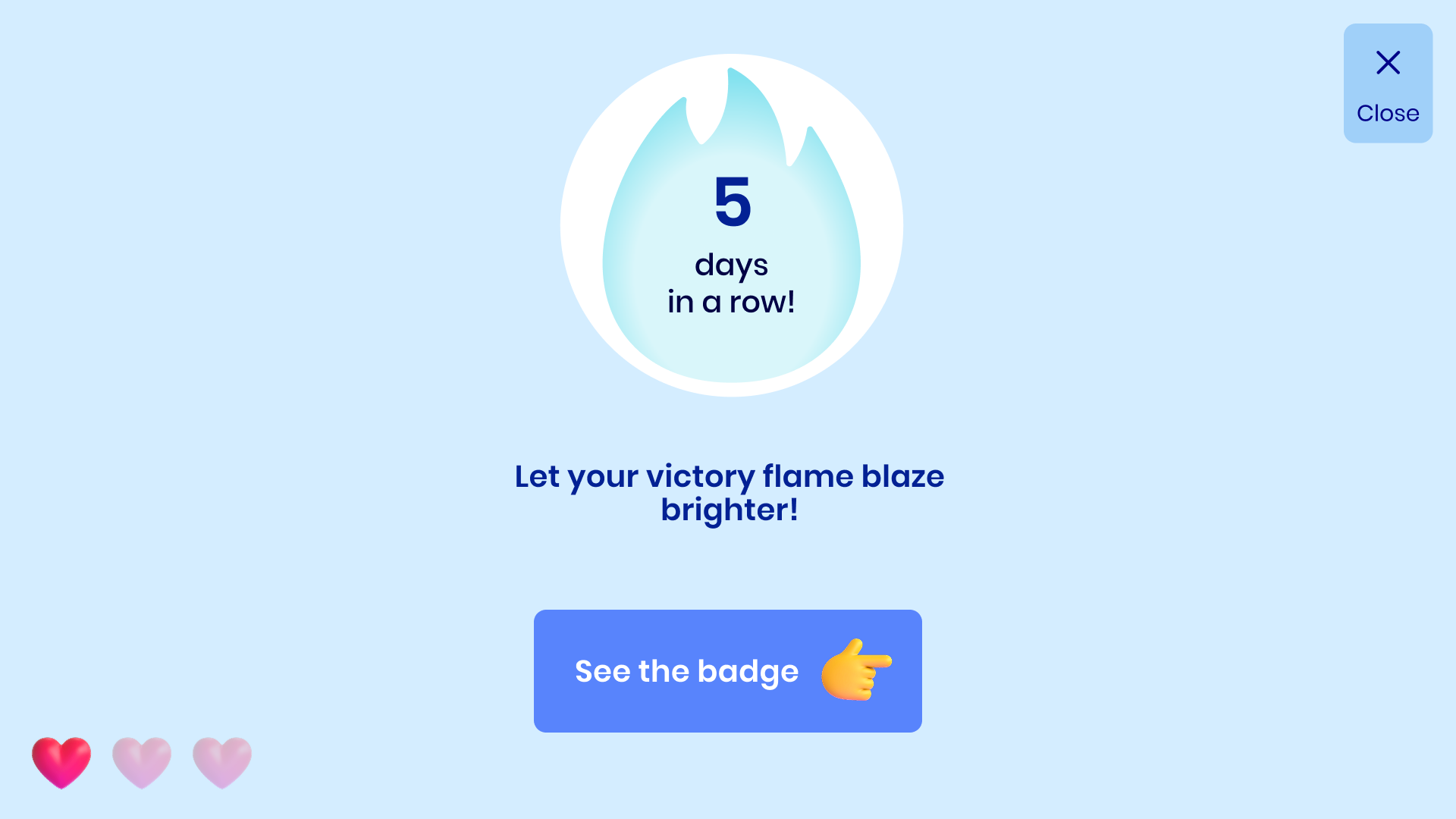
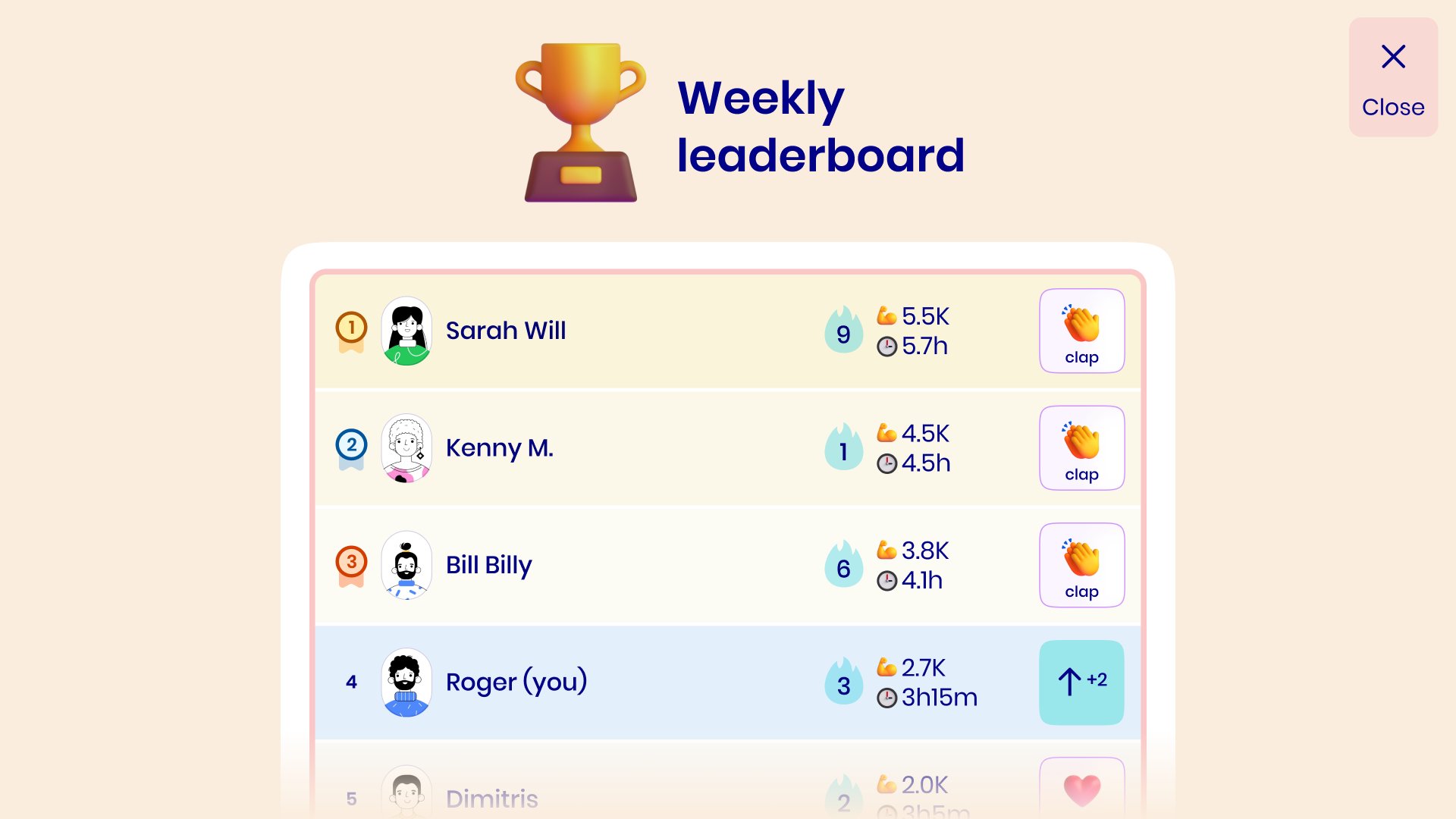
The weekly leaderboard added a social layer without making recovery feel competitive. Patients could celebrate each other's milestones, a feature clinicians flagged in research as something they'd never seen in any rehab tool before.
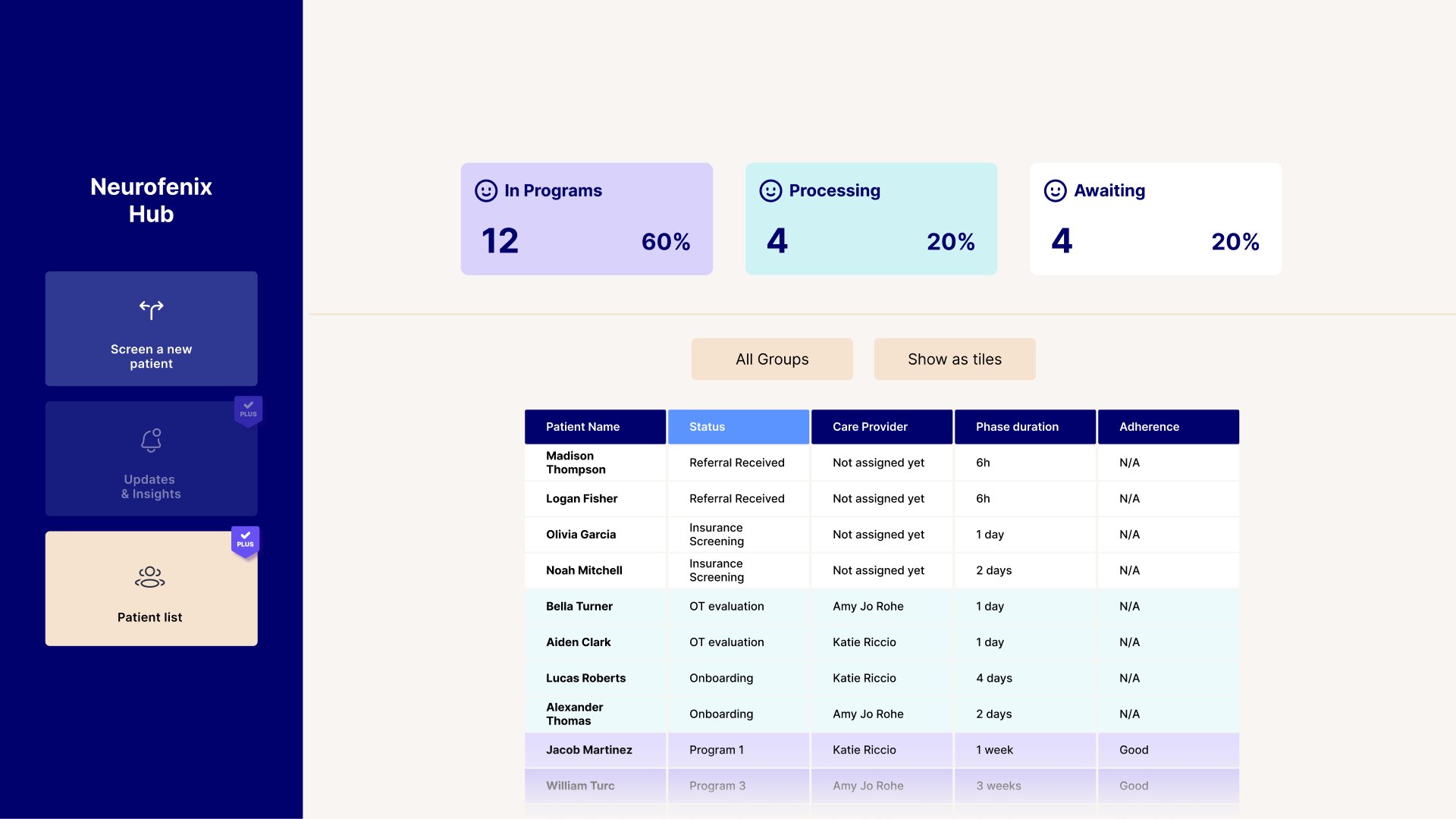
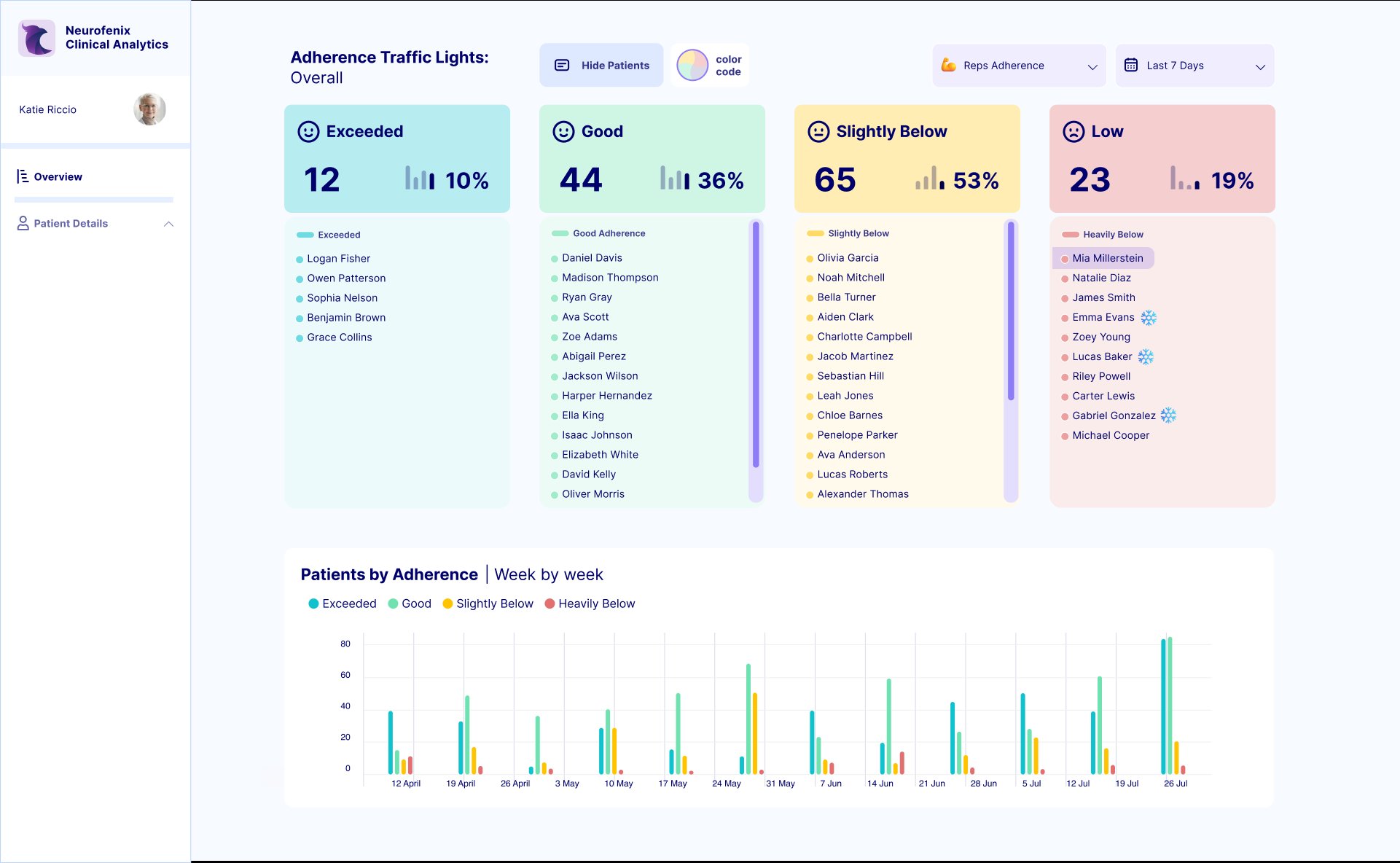
The clinician dashboard was a net-new product. The core insight from discovery: clinicians don't want to monitor all patients equally, they want to know who needs attention today. I defined the product around that question.
The primary view: a patient list with a traffic-light adherence status (Exceeded / Good / Declining / At Risk), with one-click drill-down to session data, trends, and movement breakdowns. All within HIPAA constraints: role-based access controls and audit logging built into the product spec from day one.
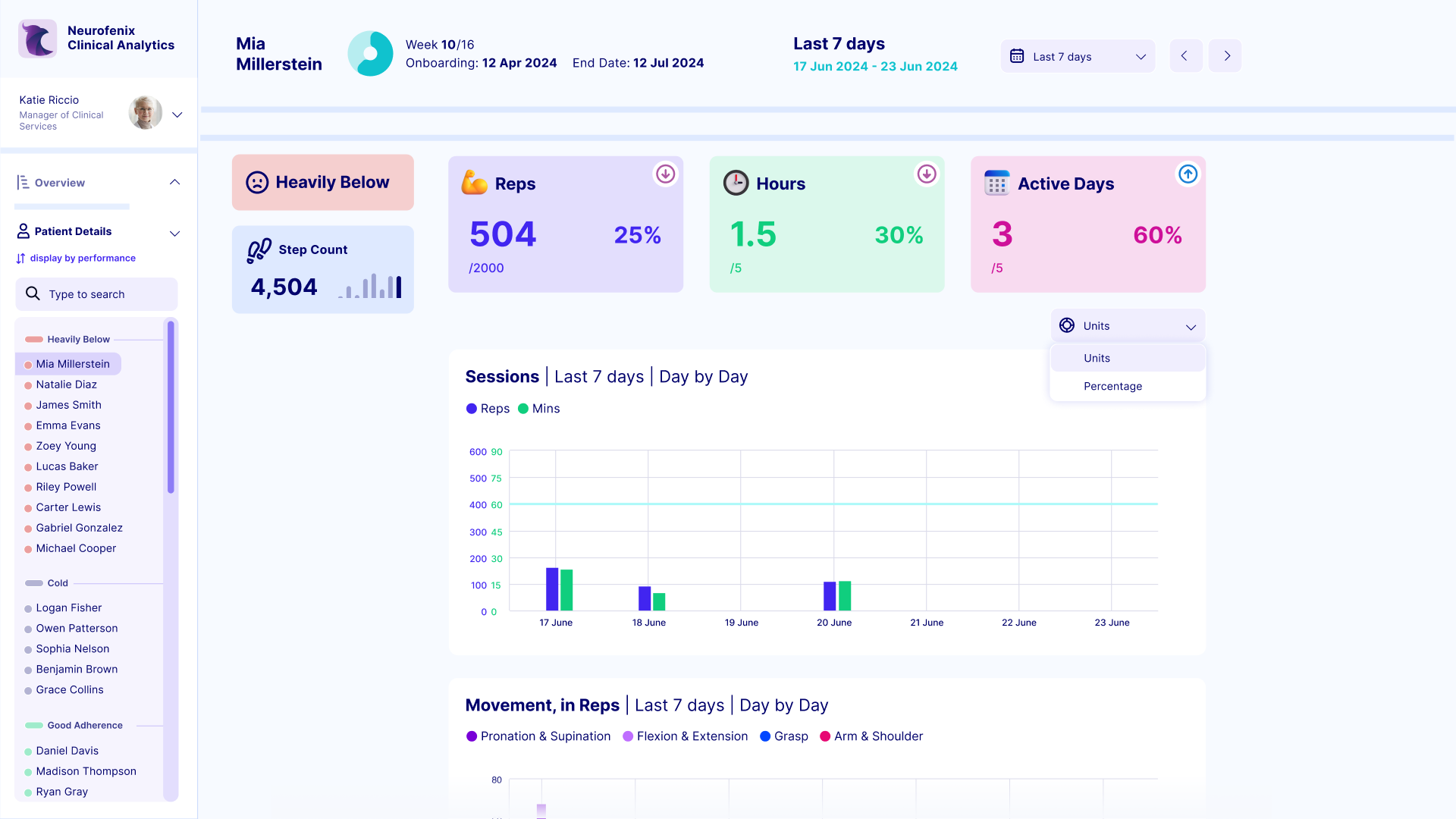
I worked directly with the commercial team to understand what health system buyers actually needed to sign, and translated those requirements into product priorities. This included HIPAA-compliant remote monitoring, EHR integration points, and a metrics framework that gave buyers evidence of clinical ROI, not just usage stats.
Enabling the first enterprise pilot: I helped secure the company's first health system pilot by building the live demo, running stakeholder sessions with clinicians, and reprioritising the near-term roadmap around the objections we heard in sales cycles.
Metrics framework: I defined measurement across all three stakeholder groups, patient activation and adherence, clinical caseload efficiency, and partner-level outcomes, so the commercial team had data to put in front of procurement.
I'd push for earlier analytics instrumentation on the clinician dashboard. We had strong behavioural data on patients but limited visibility into how clinicians actually used their tools, which made iteration slower than it needed to be.
I'd also establish quantitative accessibility benchmarks from the start. Qualitative sessions were invaluable, but task-completion metrics across impairment levels would have given us a sharper baseline for measuring progress.